
Menopause
strength training Barcelona
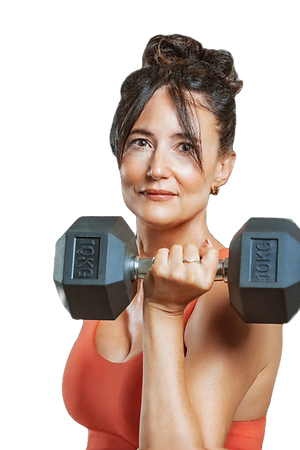
I offer expert strength training sessions for menopausal women in Barcelona. My method is built around safe, effective resistance training tailored to the physiological changes of perimenopause and menopause. As a result, my clients gain lean muscle, enjoy a greater range of movement, become stronger and are better protected against age-related bone loss.
The effects of menopause on our bodies.
Menopause fundamentally alters our biology, driving systemic shifts in both our body composition and our biochemical system. Beginning in perimenopause these changes extend far beyond hormonal changes. In fact perimenopause triggers a cascade reaction that affects your stress hormones, inflammation and energy levels. It fundamentally changing how your body functions in so many ways.
Structural and physiological changes.
-
Accelerated Muscle Loss (Sarcopenia): While muscle mass naturally decreases by 3–8% per decade after the age of 30, this rate of decline accelerates during the menopausal transition, directly impacting our physical power and metabolic efficiency.
-
Rapid Bone Density Loss: Without the protective effects of oestrogen, women can lose up to 10% of their total bone density within the first five years following menopause, significantly elevating the risk profile for fractures.
-
Connective Tissue Changes: A reduction in collagen production leads to decreased elasticity in tendons and ligaments, which in turn can leave your muscles and joints feeling stiff, cause back pain and even affect your balance and coordination.
Metabolic and cardiovascular effects.
-
Visceral Fat Redistribution: Hormonal shifts promote the accumulation of metabolically active abdominal fat; in postmenopausal women, belly fat can account for 15–20% of total body weight, compared to 5–8% in premenopausal women.
-
Cardiovascular Risk Profile: Postmenopausal status is associated with a 2.25 times higher risk of cardiovascular disease compared to the premenopausal stage.
-
Metabolic Slowdown: The combination of reduced muscle mass and hormonal changes results in a lower basal metabolic rate, which fundamentally changes how the body processes energy and manages body composition, making it vital to find ways to boost your metabolism.
Hormonal and biochemical shifts.
-
Cortisol Dysregulation: The HPA axis—your body’s primary stress response system—loses its natural hormonal buffer. Evening cortisol levels can increase by 15–20% in postmenopausal women, creating a state of physiological alertness that undermines sleep quality.
-
The Pro-inflammatory Cascade: Lower oestrogen levels trigger a rise in inflammatory proteins. Serum levels of these markers can be 20–30% higher, often manifesting as systemic joint discomfort and a slower recovery threshold between workout sessions.
-
Autonomic Nervous System Instability: This system governs core temperature and recovery signalling. Vasomotor symptoms (think hot flushes) occur in 75–80% of women in menopause. Also disrupted are the chemical signals required for deep, restorative sleep.
How menopausal symptoms can affects our motivation and energy.
Menopause can affect far more than physical health. Many women notice changes in their energy, focus and motivation long before they identify menopause as a contributing factor. Tasks that once felt straightforward can begin to require more effort, physical exercise becomes harder and everyday responsibilities feel more mentally demanding.
This is not simply a matter of being tired. The hormonal changes associated with menopause can influence mood, concentration, stress resilience and overall mental energy. Its therefore no surprise we feel less motivated. So its not actually a question of being lazy or tired. For many women, recognising that these changes have a biological basis can help make sense of an experience that is often frustrating and difficult to explain.
The Impact of perimenopause on our exercise routines.
Perimenopause changes how the body responds exercise which in turn can have profound effects on our health and fitness. Building lean muscle mass becomes considerable more difficult. Our tolerance for how hard physical exercise drops significantly so naturally we find it almost impossible to stick to our old training routine.
We therefore need to recalibrate both our training plan and mindset. Progress now replies much less on how much hard exercise we performed and more by how training, recovery and overall life stress are balanced.
This shift makes exercise programming more important than ever, particularly when the goal is to maintain strength, function and long-term health.
The importance of strength training for menopausal women.
A strength training routine can play a vital role during menopause by helping women maintain muscle, protect bone health and preserve their physical independence. Regular resistance training done correctly can build muscle which in turn is associated with substantial benefits for long-term health, function and overall quality of life.
The health risks of quitting exercise while menopausal.
Stopping exercise during menopause can have consequences that extend far beyond fitness. Research links physical inactivity to an increased risk of osteoporosis, cardiovascular disease, type 2 diabetes, obesity and dementia, alongside increasing the risk of falls and therefore fractures in later in life.
Many of these conditions develop gradually over many years, which is why they are easy to overlook in the short term. Therefore the decision to stop exercising today may not feel significant. However the cumulative effect over the next decades can be substantial particularly for women. Women already face a statistically higher risk of frailty, undiagnosed cardiovascular disease, and dementia in comparison to men, so we really can't afford to stop moving.
Evidence suggests that committing to at least 120 minutes of exercise per week significantly alters this trajectory. A study in Neurology found this level of activity reduced dementia risk by 88–90%, while data from the Nurses’ Health Study proved that the same amount of weekly resistance training (120mins) cut the risk of heart attacks by 20% and myocardial infarction by 44%.
These findings are the reason I specialise in menopause strength training. The opportunity to meaningfully change women's health as we age is simply too important to ignore. Helping women add more healthy, active years to their lives has become the driving force behind my work. It's why I devote so much of my time to reading the latest research and continually developing my practice, enabling me to provide the highest standard of evidence-based coaching and support.
The benefits of resistance training in menopause.
The evidence for strength training during menopause is compelling, with benefits extending far beyond fitness alone.
Resistance training helps promote lean muscle mass in menopausal women.
Resistance training is the one tool we have for combating muscle wastage (sarcopenia) in menopause. Clinical trials have shown that consistent, structured strength training programmes result in an increases of lean body mass in postmenopausal of approximately 1–2kg in women . Source
It helps protect women's bone density.
Research indicates that structured resistance training can increase bone mineral density by 1–3% in women post menopause, significantly reduce the risk of osteoporotic fractures and providing long-term protection that passive exercise like yoga cannot replicate. Source
Its even proven to reduce the symptoms of menopause.
Regular exercise serves as a powerful therapeutic tool for those suffering from menopause symptoms. Clinical data shows that consistent, moderate-to-vigorous physical activity can facilitate a 20–30% reduction in anxiety and fatigue-related markers, offering a distinct improvement in overall quality of life . Source
This strength of this evidence on the benefits of resistance exercise as we age presented a picture that was remarkably clear to me. The foundation of any effective exercise regimen for menopausal women had to be low-impact strength training. That knowledge has shaped the way I've chosen to practise as a personal trainer.
Starting from this foundation, I've now built a broader toolbox of complementary skills and specialist knowledge as diverse as stretch coaching and co-morbidities for older adults and even powerlifting. I've done this because I understand from my own experience that every woman's journey through menopause is unique. I therefore wanted to have the breadth of knowledge needed to tailor my method to the each individual client, ensuring that as a coach I can support each woman in the best way possible.
If you would like to learn more about this approach, drop me a quick WhatsApp or email.
The ins and outs of strength training during menopause.
The results you get from strength training during menopause depend largely on three factors: how often you train, which exercises you choose and how much weight you lift.
How much strength training should women do during menopause?
the evidence clearly recommends strength training for 2 hours a week. However, the reality for many women juggling work, family and other commitments doing so is not always that easy.
In my experience, one well-structured 50 minute strength training session each week is significantly better than doing nothing, or more but ineffective exercise with insufficient weight. Ideally, that session is then supported by 2-4 shorter workouts sessions at home (2 x30 mins, or 4 x 15mins), which in total does add up to the recommended 120 minutes per week.
Having access to the personal training in Barcelona that I offer has benefits that extend far beyond ensuring you get that one hour of exercise done each week. I : send you home each week with tailored homework, teach you the techniques you need to exercise at home, in the gym or in the park, hold you accountable and support you physiologically. I am also really fun!
As a result you'll find yourself achieving the recommended 120 minutes of weekly exercise with far less thought and effort than you anticipated. In fact your only regret will be not having starting sooner.
What are the best strength training exercises for menopausal women?
The best strength training exercises for menopause are compound moves that work multiple muscle groups.
Exercises such as squats, rows, presses, lunges, deadlift variations and loaded carries generally provide the greatest return for the time invested. They help maintain strength, muscle mass, balance and bone health while supporting the physical demands of everyday life.
This is why I primarily use free weights, barbells, dumbbells, kettlebells and resistance bands rather than relying heavily on machines. They allow movements to be adapted to the individual while developing practical, real-world strength.
What is an appropriate weight for women to lift during menopause to get results?
The right weight depends on the exercise, your training experience, your current strength levels, previous injuries and recovery capacity. I can however guarantee you its heavier than you think!
As a general rule of thumb you are going to need to choose a weight that allows you to complete all of your target repetitions with good technique, while making the final 3 - 4 reps feel genuinely challenging with the last one near to impossible.
Weight is only one training variable. Factors such as tempo, exercise selection, training volume, range of motion and progression can have an equally important impact on your results.
This is where expert programme design becomes valuable. By manipulating these variables over time, I can keep clients progressing long after a generic programme would have stopped delivering results.
Tailored strength training programs in Barcelona.
My strength training programmes combine personalised coaching, smart exercises and sustainable habits to help women thrive through menopause.
Personalized training for women 40+.
As a personal trainer specializing in menopausal women, I offer personalized training programs in Barcelona that are meticulously tailored to individual needs, considering unique challenges such as fluctuating hormonal levels.
Whether you are 40+, 50+, or 60+, my programs focus on improving strength, enhancing muscle mass, and boosting overall vitality. This bespoke approach ensures that every workout is optimized for your specific stage of midlife and your personal health goals.
Functional strength training and its benefits in menopause.
Safety and effectiveness are paramount in my strength training sessions. I guide clients through a range of strength exercises, from using free weights and dumbbells to incorporating resistance bands and bodyweight movements like the plank. The emphasis is on proper form and progressive overload, ensuring that you achieve significant improvements in strength without risking injury. My expertise guarantees a safe and productive workout environment for all my menopausal women clients.
Integrating strength training into your life.
Integrating strength training into your daily life isn't as difficult as it may sound. I have proven tools to help you create a sustainable routine, that combine my personal training sessions with a structured home exercise program. My goal is to empower you to make physical activity a consistent part of your lifestyle, ideally engaging in resistance training four times a week. This consistency is key to maintaining bone and muscle health and achieving long-lasting results.
About me: Your expert menopause personal trainer
I am Barcelona's only UK-trained menopause strength training specialist, helping women build strength, protect their health and navigate the physical changes of midlife with expert guidance.
My journey through menopause.
As a 51-year-old female personal trainer, I have personally navigated through a whole number of symptoms like night sweats, low energy and what was it, ah yes brain fog!
This personal experience has profoundly shaped my understanding and empathy, allowing me to connect with other menopausal women on a deeper level.
I am pleased to report however I've successfully used strength training, supplements and good nutrition to not only manage symptoms but to thrive. With renewed energy, transforming my own midlife journey and developing a robust type of exercise program that truly works for women 40+, 50+, and 60+.
My qualifications and training philosophy.
My qualifications extend beyond personal experience; I am a certified personal trainer with a level 4 qualification and a specialized focus on strength training for menopause. My training philosophy centres on empowering menopausal women to reclaim their vitality through safe and effective strength exercises. I believe in a holistic approach that considers individual hormonal changes, ensuring that each workout is tailored to maximize benefits while minimizing risk. We’ll focus on improving strength, building lean muscle, and enhancing overall physical activity, using a variety of tools from free weights and dumbbells to resistance bands and bodyweight exercises.
Why choose me as your personal trainer?
Choosing me as your personal trainer in Barcelona means partnering with someone who genuinely understands the unique challenges and opportunities of being a women in menopause. My expertise in strength training, combined with my own journey, allows me to provide unparalleled support and guidance.
I am not a coach who just offer workouts in the gym, and then gracias y adios! Instead I offer a comprehensive strategy to help you feel better in your body today while future-proofing it for tomorrow and beyond.
I'm an English-speaking personal trainer in Barcelona and a British trained menopause coach.
I'm a native English-speaking British personal trainer specialising in strength training for menopause in Barcelona.
I began my career in the UK, where professional education around menopause has developed rapidly over the last decade and remains ahead of what is currently available in Spain.
Although English is my native language, I'm also half Spanish, so sessions can be conducted in English, Spanish or a combination of both. For some clients, it's a chance to improve their strength and their Spanish at the same time.
I get real results for clients.
My approach to strength training for menopausal women has garnered significant positive feedback, with many clients reporting substantial improvements in their muscle mass, bone density, and overall energy levels. They frequently share stories of reduced hot flashes, better sleep, and a newfound confidence that comes from improved strength and vitality. These testimonials highlight how targeted resistance training, under expert guidance, has empowered them to navigate menopause with greater ease, providing compelling evidence that a consistent workout regimen is key to thriving during midlife.
Getting started with strength training for menopause.
Ready to start strength training through menopause? Here's how the process works.
How to begin your strength training journey.
We begin with a thorough assessment to understand your current fitness level, health history, and specific goals related to menopause and physical activity. This initial consultation allows us to design a personalized training program that is both challenging and achievable, incorporating effective strength exercises like squats, lunges, and planks. Our focus will be on building a sustainable routine that integrates seamlessly into your life, whether through dedicated sessions or a robust home exercise plan.
Booking your first session in Barcelona with me.
Ready to get started? For the quickest response, WhatsApp me today to arrange your initial consultation. If you prefer email, simply use the contact form in the footer and I'll be in touch as soon as possible.
Not in Barcelona ? or prefer to work online?
Book online for expert one-to-one strength training tailored to your goals, wherever you are. Get in touch today to arrange your initial consultation. I'd love to hear about your goals and answer any questions you may have.